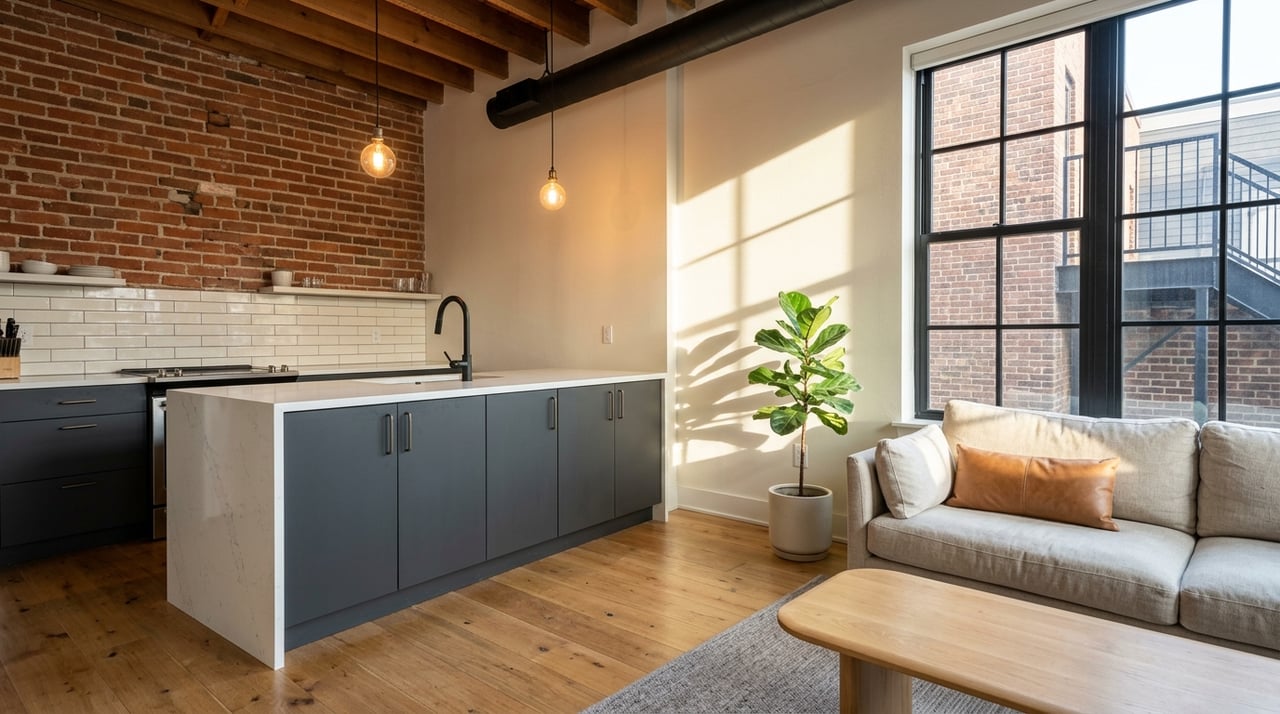
A Guide to Over-the-Rhine Monthly Living Costs
Wondering why one Over-the-Rhine apartment seems manageable on paper while another ends up costing far more each month? In OTR, your real monthly housing cost often depends on more than rent or a mortgage alone. If you are planning a move, this guide will help you understand the recurring expenses that shape your budget so you can compare options with more confidence. Let’s dive in.
Over-the-Rhine is one of Cincinnati’s historic urban neighborhoods, and that character plays a real role in what you pay each month. Housing costs here can shift based on building age, shared systems, parking needs, and whether certain expenses are bundled into rent or condo fees.
That means two homes with similar asking prices may have very different monthly totals. A lower rent or sale price does not always mean a lower monthly cost once utilities, HOA dues, taxes, and parking are added in.
If you are renting in OTR, it helps to think in ranges rather than one average number. As of May 2026, average rents reported by Apartments.com are about $1,092 for a studio, $1,160 for a one-bedroom, $1,693 for a two-bedroom, and $2,087 for a three-bedroom.
At the same time, active listings show plenty of variation. Smaller or older units may land near the lower end, while newer or amenity-heavy studio and one-bedroom apartments can run roughly $1,150 to $1,725 or more.
Zillow also shows a broad spread of available rentals in OTR. That is a good reminder that finishes, layout, building condition, and included services can all affect what you actually pay month to month.
Before you compare rentals, ask exactly what the monthly rent covers. In some buildings, water, trash, or internet may be included. In others, those costs are paid separately.
Trash is one area where the setup can differ more than you might expect. The City of Cincinnati provides collection for qualifying residential dwellings, but some other buildings are treated as commercial and must contract with a registered waste hauler, which can show up as a building-level or lease-level expense.
If you are thinking about buying in Over-the-Rhine, property type matters a lot. Zillow places OTR’s typical home value at $328,199 as of March 2026, while Redfin reports a March 2026 median sale price of $270,000 and a median listing price around $300,000 for current condo inventory.
Current condo listings show a wide range, with examples around $179,900, $279,900, $290,000, $335,000, and $399,000. Single-family inventory is much thinner, and listed examples around $775,000 and $825,000 show how sharply the monthly cost can change once you move beyond condo pricing.
For buyers, that means the sticker price is only the start. You will also want to account for taxes, HOA dues if applicable, utilities, parking, and maintenance expectations.
OTR condo HOA dues often fall in the low hundreds per month, but there is still a wide spread. Current listing examples include fees of $120, $168, $241, $255, $275, $370, $414, and $463 per month.
That range matters because HOA fees can either add to your monthly burden or offset other bills. In one current urban-core condo example, the HOA covers water, sewer, trash, TV and internet, snow removal, and one parking space. An extra parking space in that example costs $165.
So if you are comparing two condos, the one with the higher HOA fee may still be the better monthly value. The key is to look at your full out-of-pocket cost, not just the mortgage and dues separately.
Parking is one of the easiest monthly costs to underestimate in OTR. If your building does not include a space, or if your household has more than one car, monthly parking can noticeably change your budget.
According to the City of Cincinnati, downtown monthly parking rates range from $25 to $150. Current 3CDC Over-the-Rhine parking options include $90 for the Liberty & Elm Lot, $135 for Washington Park Garage and Mercer Commons Garage, $140 for the Elm Street Lot, and $150 for one Vine Street lot.
On-street parking is also managed by location, and enforcement hours vary by subarea. That means convenience and cost can look different block by block.
For some households, the Cincinnati Connector can help reduce the need for daily parking. The streetcar is fare-free and runs a 3.6-mile loop connecting Over-the-Rhine, Downtown, and the Banks.
That does not eliminate the need for a car in every situation, but it can be a useful budget offset. If you work or spend a lot of time along that route, transportation costs may be lower than you first assume.
Utilities in OTR can vary by building type and what is included in your lease or HOA. Still, it helps to have a baseline for common city service costs.
Greater Cincinnati Water Works says a 5.55% water-rate increase took effect on January 1, 2026. Its published example for a single-family city household using 8.3 CCF per month comes to $41.30 for water.
The Metropolitan Sewer District’s 2026 residential rate sheet shows a 5/8-inch meter minimum base charge of $43.06 per month, with usage above 3 CCF billed at $6.277 per CCF. Using that same 8.3 CCF example, combined water and sewer comes to roughly $117.82 per month before separate charges such as stormwater or other line items.
Electric and gas also deserve attention. Duke Energy Ohio’s residential price-to-compare for electricity generation supply is 10.08 cents per kWh for May 2026, and its gas standard service offer is 74.49 cents per CCF for April 2026. Those are supply-only figures, so delivery and other charges still add to your bill.
For buyers, property taxes are one of the biggest monthly costs beyond the mortgage itself. In Hamilton County, 2026 is a triennial appraisal year, with new values effective on the January 2027 tax bill.
Using county auditor annual-cost examples, Cincinnati school-district taxes are $1,289.78 per $100,000 of market value and county-wide levies are $432.74 per $100,000. That works out to about $143.54 per month per $100,000 before parcel-specific city or special-district lines.
Scaled to Zillow’s typical OTR home value of $328,199, that rough benchmark comes to about $5,653 per year, or around $471 per month. This is only an estimate, but it shows why taxes should be part of your monthly budget from the beginning.
OTR buyers should also ask whether a property has a residential tax abatement. Cincinnati’s Residential Tax Abatement Program says qualifying new construction or renovation can be taxed on the pre-renovation or new-construction value for up to 15 years.
That can materially affect your monthly carrying cost. Two similar-looking units may have very different tax bills depending on abatement status.
Over-the-Rhine is Cincinnati’s historic heart, with many two- to five-story buildings shaped by 19th-century design and dense urban construction. That history is part of the neighborhood’s appeal, but it can also affect how owners should budget over time.
If you own an older loft or condo in OTR, it is smart to expect more attention to upkeep than you might in a newer suburban property. That does not mean every building will be high-maintenance, but it is a reasonable budgeting expectation in a historic district with older structures and shared systems.
For condo owners, part of that maintenance planning may happen through HOA dues and reserves. For owners of other property types, it may mean setting aside extra funds for repairs and ongoing care.
When you are looking at homes in OTR, try using a full-cost checklist instead of comparing only rent or list price. A clear side-by-side view can help you avoid surprises.
Here are the main categories to review:
If one home has a higher monthly fee but includes utilities, internet, and parking, it may be more affordable than a lower-priced option with several separate bills. Looking at the full picture gives you a more accurate answer.
Over-the-Rhine is not a neighborhood where every property fits the same formula. Condo fees, parking, tax abatement status, and utility setup can all change the real monthly number.
That is why local guidance matters when you are comparing homes here. A neighborhood-specific look at the numbers can help you spot value, ask better questions, and build a budget that reflects how you actually live.
If you want help comparing condos, lofts, or other homes in OTR, High Watch Home Group can help you break down the real monthly costs and find the right fit for your goals.
Stay up to date on the latest real estate trends.
Whether working with buyers or sellers, High Watch Home Group provides outstanding professionalism into making they're client’s real estate dreams a reality. Get assistance in determining current property value, crafting a competitive offer, writing and negotiating a contract, and much more. Contact them today.