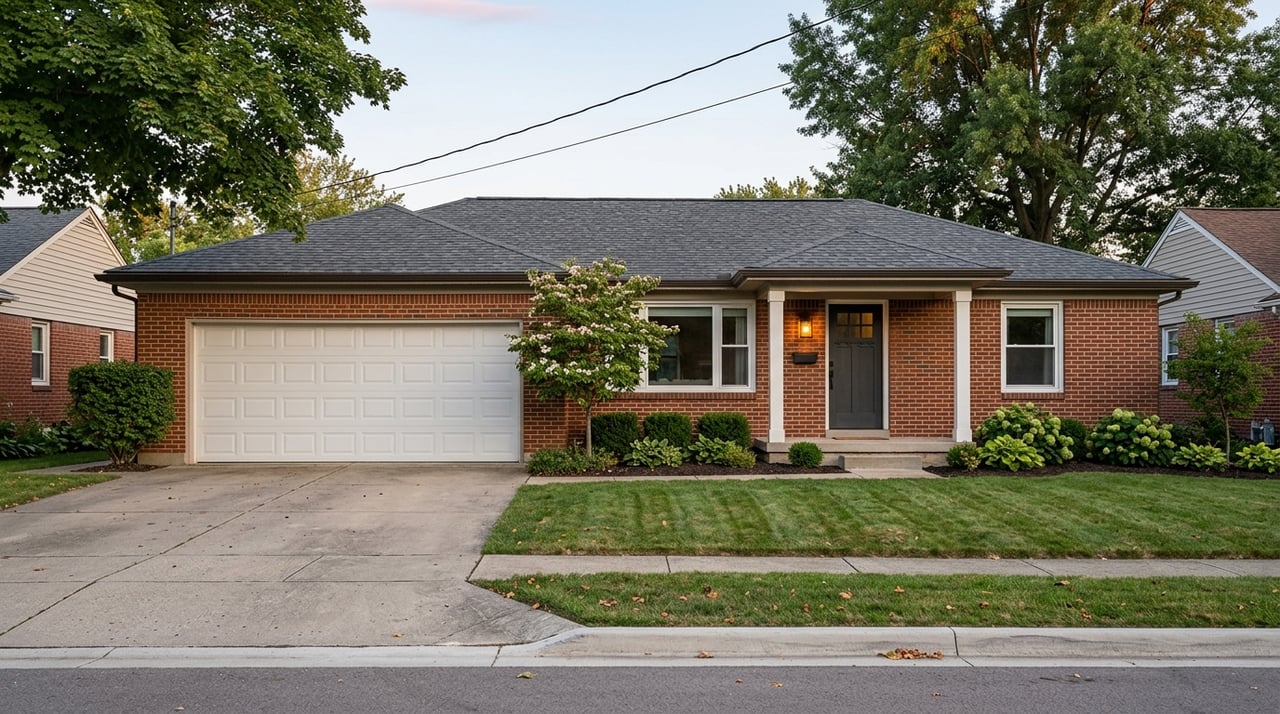
What Anderson Township Home Values Mean For Your Sale
Wondering what your Anderson Hills home is really worth right now? If you are thinking about selling, it is easy to get pulled in different directions by online estimates, market headlines, and neighbor chatter. The good news is that you do not need to guess. By understanding what local home values actually mean for your sale, you can price more confidently, avoid costly missteps, and put your home in a stronger position from day one. Let’s dive in.
If you look at public market data for Anderson Township, you will see a few different stories at once. One March 2026 snapshot shows a median sale price of $336,000, up 1.8% year over year, with homes taking about 42 days to sell and a 100.2% sale-to-list ratio. Another source for the same general area shows a median listing price of $402,500, 112 homes for sale, 29 median days on market, and a 100% sale-to-list ratio.
That does not mean the data is wrong. It usually means the source is using a different geography, time frame, or method. Some reports focus on closed sales, while others lean on active listings. For a seller in Anderson Hills, the practical takeaway is simple: portal estimates and market labels are only a starting point. Your pricing strategy should come from recent comparable sales and the details of your specific home.
The current numbers suggest that Anderson-area values are still holding up, but buyers are more selective than they were during the fastest market years. A sale-to-list ratio around 100% means many buyers are paying close to asking price, not wildly above it. That is encouraging for sellers, but it also means your list price needs to be realistic.
In the Anderson Township data, about 37.5% of homes sold above list price. That shows strong outcomes are possible, but they are not automatic. The same dataset also notes that average homes can take around 40 days to go pending, while especially desirable homes may move closer to 30 days.
Regional inventory also matters. In Greater Cincinnati, active inventory was up about 25% year over year in early 2026. More choices for buyers usually mean pricing discipline matters more, and an overpriced launch can cost you time and negotiating power.
Your home value is not pulled from one magic formula. It is shaped by recent sales, your home’s condition, and how it compares to similar properties. Features like square footage, bedroom and bathroom count, year built, and updates all affect how buyers and appraisers see value.
Ohio valuation rules also reinforce this point. County auditors consider the physical nature and construction of the property, its location, and the fair market value of similar properties. Hamilton County has also stated that a property’s sale price is the best indicator of market value and that values are based on recent market activity, comparable properties, and Board of Revision decisions.
For you as a seller, that means a headline estimate is never the whole story. Two homes in the same part of Anderson Hills can land at very different prices if one is move-in ready and the other needs work. Buyers notice those differences quickly, and so do appraisers.
Online home values can be useful, but they should be treated as a range, not a final answer. Automated valuation models use property details, recent sales, and local market data to generate an estimate. Different models can produce different numbers because they may rely on different comparable sales, different update timing, or different goals.
This matters in Hamilton County because tax value, online value, and market value are not the same thing. Under Ohio rules, county auditors appraise property at true value in money and place it on the tax duplicate at 35% of that value. That tax process follows its own schedule, including a six-year reappraisal cycle and a three-year update cycle.
If you are preparing to sell, the better approach is to use online estimates as a rough starting point. Then compare them with recent sold comps, current competition, and your home’s actual condition. That gives you a much more useful pricing picture.
In a market where many homes are selling close to list price, condition can make the difference between a smooth sale and a stale listing. Buyers tend to respond fastest to homes that feel well cared for, clean, and easy to picture themselves in. Even when your location and size are strong, deferred maintenance can narrow your buyer pool.
This is especially important when you consider the local sales mix. In a late-2025 Anderson and Southwest Ohio update, 61% of closings were in the $250,000 to $500,000 range, while only 5.7% were above $750,000. That suggests the broadest pool of buyers is in the mid-market range, where presentation and perceived value matter a lot.
A polished launch can help your home compete for the strongest buyers. For sellers, that often means focusing on the basics first:
Many sellers hope to leave room for negotiation by pricing high. In today’s Anderson-area market, that strategy can backfire. When buyers have more options, they are more likely to skip over a listing that feels overpriced, even if the home itself is appealing.
A slow start often leads to price reductions, longer days on market, and weaker leverage. Buyers may wonder what is wrong with a listing that sits too long, even when the real issue was simply the initial price. By contrast, a well-priced home is more likely to attract attention early, generate stronger interest, and stay closer to list.
That is why recent sold comparables matter so much more than a hopeful asking number. If your launch price matches what the market supports, you are giving yourself the best chance at a clean and efficient sale.
Even after you accept an offer, value still matters. If the buyer is financing the purchase, the appraisal can affect whether the deal moves forward smoothly. A low appraisal can lead to renegotiation, a larger down payment from the buyer, or in some cases, a canceled contract.
That is another reason pricing from real local evidence matters from the beginning. When your price is grounded in recent comps and your home shows well, you reduce the risk of a gap between contract price and appraised value. That can help you protect both your timeline and your proceeds.
If you are selling in Anderson Hills, the most helpful way to read home values is to combine three things: recent sold data, current competition, and your home’s specific condition. Any one of those on its own can give an incomplete picture. Together, they create a pricing strategy that is much more useful.
Here is a practical way to think about it:
This approach is especially important in a market where public reports can describe the same area differently. Instead of reacting to one headline number, you can focus on the local facts that actually shape your sale.
If you are considering a move, now is a good time to get specific about your home’s position in the market. Anderson-area pricing is still supported by recent closed-sale data, but buyers are paying attention to value, condition, and price alignment. Sellers who prepare well and price from current comps are in a better position to sell near list and avoid unnecessary days on market.
That is where hands-on local guidance can make a difference. A strong pricing plan is not just about finding a number. It is about understanding how your home will be seen, how it stacks up against nearby listings, and how to present it for the best possible response.
If you are thinking about selling in Anderson Hills, High Watch Home Group can help you evaluate your home’s value, build a smart pricing strategy, and launch with the kind of polished marketing that helps your home stand out.
Stay up to date on the latest real estate trends.
Whether working with buyers or sellers, High Watch Home Group provides outstanding professionalism into making they're client’s real estate dreams a reality. Get assistance in determining current property value, crafting a competitive offer, writing and negotiating a contract, and much more. Contact them today.